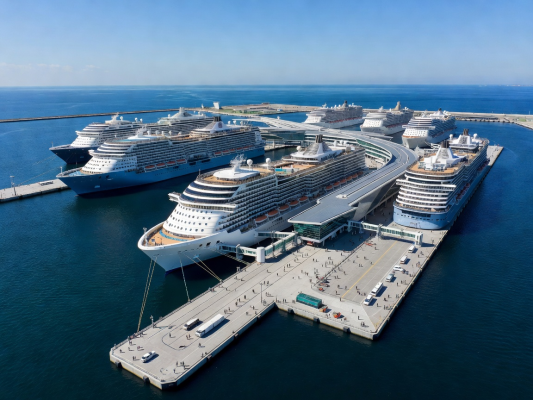
Introduction to the Cruise Hub
The Port of Barcelona holds the distinction of being the busiest cruise port in Europe and one of the most active in the world. Serving as both a turnaround (home) port and a major transit stop for Mediterranean itineraries, the facilities are designed to handle immense volumes of passengers with efficiency, security, and comfort. The port’s infrastructure is distinctly divided into different zones, catering to vessels of varying sizes—from boutique luxury liners to the world's largest mega-ships.
Adossat Pier Terminals (Moll Adossat)
The primary location for large modern cruise ships is the Adossat Pier. Located furthest from the city center, this extended quay offers the deep-water drafts and expansive docking space required by modern mega-cruise ships.
- Terminals A, B, C, and D (Palacruceros): These purpose-built terminals offer state-of-the-art facilities. They are equipped with advanced security screening, large baggage handling areas, and comfortable waiting lounges.
- Terminal E (Helix): One of the newest additions, this terminal represents a massive investment in passenger flow efficiency and environmental standards, capable of turning around ships with over 6,000 passengers in a single day.
Because the Adossat Pier is located a substantial distance from the historic city center, access is generally facilitated by the Cruise Bus (T3 PORTBUS), private transfers, and official city taxis. Walking from these terminals to the city center is generally not recommended due to distance and the industrial nature of the surrounding port roads.
World Trade Center (WTC) Terminals
Closer to the city, situated at the foot of La Rambla, are the World Trade Center terminals (North, South, and East). These facilities cater primarily to smaller luxury cruise ships, mid-sized vessels, and regional ferries.
The distinct advantage of the WTC terminals is their proximity to the urban core. Passengers arriving here can easily disembark and walk directly into the heart of Barcelona, enjoying immediate access to public transportation networks, local dining, and historical sites. However, due to draft limitations and the size of the turning basin, these terminals cannot accommodate the massive vessels found at the Adossat Pier.
Passenger Logistics and Facilities
Managing the flow of thousands of disembarking and embarking passengers simultaneously requires a highly coordinated logistics network. The port authorities collaborate closely with cruise line operators, local transport unions, and border control agencies to ensure smooth operations.
Inside the terminals, passengers will find standard amenities including currency exchange, duty-free shopping, VIP lounges, and dedicated services for passengers with reduced mobility. Baggage logistics operate on an industrial scale, with automated conveyor systems moving thousands of luggage pieces between the ships and the terminal claim areas within hours.
Pros and Cons of Cruising from Barcelona
Pros:
- Unmatched connectivity with El Prat International Airport, located just a short drive away.
- Extensive variety of itineraries covering the Western Mediterranean, Canary Islands, and transatlantic crossings.
- Excellent pre- and post-cruise tourism opportunities within the city.
Cons:
- The sheer volume of passengers can lead to crowding at popular city landmarks on peak docking days.
- Transfer logistics from Adossat Pier require planning, as public transit options are limited to the shuttle bus.
Future Developments
The Port of Barcelona is continually evolving its passenger facilities. Current strategic plans focus on consolidating all cruise traffic to the Adossat Pier to free up spaces closer to the city center for public use and mitigate urban congestion. Additionally, all new terminal constructions mandate strict environmental standards, integrating shore power capabilities to reduce the environmental footprint of docked vessels.