The Evolution of the Old Port
Port Vell (Catalan for "Old Port") is the historical heart of Barcelona's maritime activity. For centuries, this area was a bustling, utilitarian space crowded with merchant ships, warehouses, and industrial equipment. However, the urban regeneration spurred by the 1992 Olympic Games fundamentally transformed Port Vell. Today, it stands as a prime example of successful waterfront integration, seamlessly blending public leisure spaces, commercial retail, and luxury maritime infrastructure.
Marina Port Vell
One of the focal points of the revitalized area is Marina Port Vell. This facility has been extensively upgraded to serve as a world-class homeport for superyachts and mega-yachts. Offering berths for vessels exceeding 100 meters in length, the marina attracts a global elite seeking state-of-the-art facilities coupled with unparalleled access to a major European cultural capital.
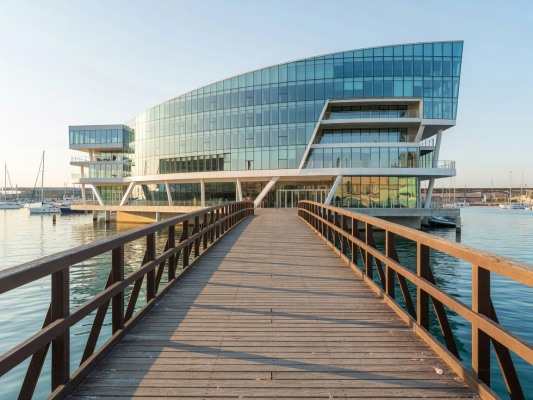
The marina's infrastructure includes advanced security protocols, direct fuel bunkering, dedicated crew facilities, and concierge services. Its architectural design, featuring modern, glass-fronted reception buildings and stylish maritime promenades, complements the historical backdrop of the Gothic Quarter.
Leisure and Commercial Integration
Port Vell is not strictly reserved for private yacht owners; it is a heavily utilized public space offering a variety of attractions for residents and tourists alike.
The Maremagnum Complex
Situated on an artificial island in the center of the harbor, the Maremagnum is a large commercial complex featuring retail stores, restaurants, and entertainment venues. Uniquely, it is one of the few commercial centers in Barcelona permitted to open on Sundays, making it a highly popular weekend destination. The complex is accessible via the striking Rambla de Mar, an undulating wooden pedestrian bridge that opens to allow small vessels to pass.
Aquàrium Barcelona
Located adjacent to the Maremagnum, the city's aquarium is one of the largest in Europe devoted to Mediterranean marine life. It serves as both a major tourist attraction and a center for marine conservation and education.
Architectural and Public Spaces
The perimeter of Port Vell is defined by wide, palm-lined promenades such as the Passeig de Colom. These walkways are favored by pedestrians, cyclists, and street performers, creating a vibrant transition zone between the dense urban grid of the Ciutat Vella (Old City) and the open water.
Historical buildings dot the landscape, including the Palau de Mar, a former general warehouse that now houses the Museum of the History of Catalonia, and the iconic Port Authority building. At the foot of La Rambla stands the Columbus Monument (Mirador de Colom), serving as a historical gateway pointing toward the sea.
Connecting the City to the Sea
The success of Port Vell lies in its accessibility. It successfully broke down the industrial barriers that once separated Barcelona's citizens from their coastline. Today, the marina and surrounding infrastructure demonstrate how historic port areas can be repurposed to drive modern economic sectors—such as luxury tourism and retail—while providing immense recreational value to the general public.