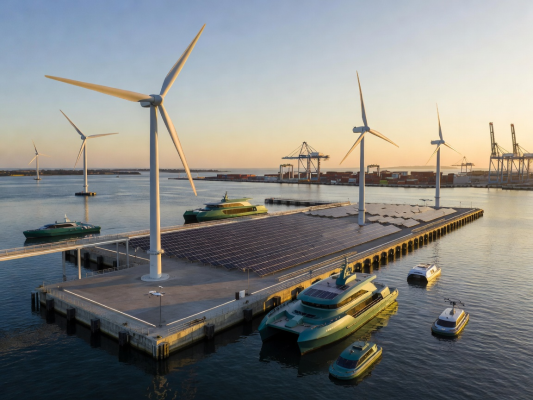
The Push for a Greener Port
As one of the Mediterranean’s busiest maritime hubs, the Port of Barcelona faces significant environmental challenges. The high volume of vessel traffic, heavy logistics operations, and proximity to a dense urban population necessitate aggressive sustainability strategies. The port authority has responded by implementing a comprehensive environmental master plan aimed at drastically reducing local air pollution and greenhouse gas emissions.
Shore Power (Cold Ironing)
One of the most significant initiatives currently underway is the electrification of the port's docks, commonly referred to as "cold ironing" or Shore-side Power Supply (OPS). Traditionally, docked ships keep their auxiliary diesel engines running to maintain onboard power for lighting, heating, cooling, and critical systems. This practice is a major source of localized emissions (NOx, SOx, and particulate matter) and noise pollution.
By investing tens of millions of euros into electrical substations and grid connections, the port is establishing the infrastructure required to allow ships to plug into the local power grid. By drawing electricity generated from cleaner land-based sources, vessels can shut down their engines completely while berthed. This initiative prioritizes the container terminals and cruise piers, which see the highest energy demand.
LNG Bunkering Infrastructure
Liquefied Natural Gas (LNG) is serving as a critical transition fuel in the maritime industry's journey toward zero emissions. Compared to heavy fuel oil, LNG produces significantly less particulate matter and sulfur oxides, while also reducing carbon dioxide output.
The Port of Barcelona has positioned itself as a leading hub for LNG bunkering in the Mediterranean. Facilities have been upgraded to support both truck-to-ship and ship-to-ship LNG transfer operations. This infrastructure encourages shipping lines—particularly cruise operators and ferry companies that visit the port regularly—to deploy their newest, most environmentally friendly vessels to the region.
Water Quality and Waste Management
Maintaining the water quality within the port boundaries is a continuous priority. The port operates specialized skimmer vessels that patrol the waters daily, removing floating debris and responding to minor spills. Furthermore, strict waste management protocols dictate how ships dispose of their solid waste, greywater, and blackwater.
The port's MARPOL facilities are equipped to process various types of ship-generated waste, ensuring it is treated, recycled, or disposed of according to stringent European environmental regulations, preventing any illicit discharge into the Mediterranean Sea.
Renewable Energy and Energy Efficiency
Looking inward, the port authority is working to decarbonize its own terrestrial operations. Initiatives include:
- Solar Energy: Installation of photovoltaic panels on the expansive roofs of port warehouses, logistics centers, and administrative buildings to generate decentralized renewable energy.
- Vehicle Fleet: Transitioning the port authority's fleet of operational vehicles from internal combustion engines to electric and hybrid models.
- Smart Lighting: Replacing traditional high-mast lighting across the terminal yards with intelligent LED systems that adjust brightness based on operational activity, significantly reducing energy consumption.
Future Sustainability Goals
The long-term vision for the Port of Barcelona aligns with the broader European Green Deal. The ultimate goal is to achieve climate neutrality in the coming decades. This will require not only the completion of the electrification project but also future adaptations to support emerging alternative fuels, such as green hydrogen, ammonia, and advanced biofuels. By taking these aggressive steps, the port aims to decouple its economic growth from environmental degradation, ensuring a cleaner future for the city and the sea.